


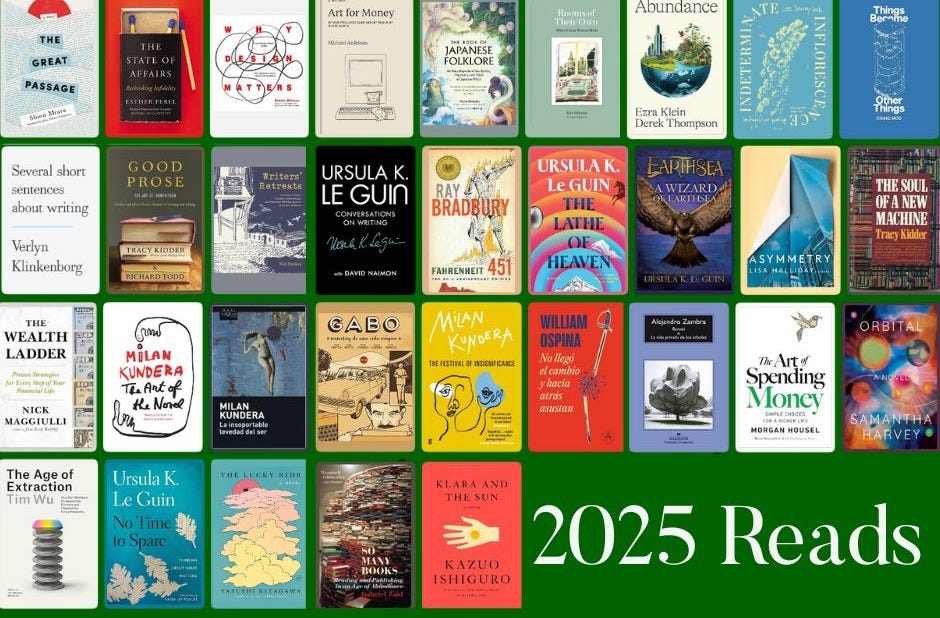
“The measure of our reading should therefore be not the number of books we’ve read but the state in which they leave us.” -Gabriel Zaid
2025 was the year I’ve read the most books in one year. I guess my Book Polygamy worked out.
Joke aside, I’m prouder of the process of integrating reading into my life more than the number itself.
I had a couple goals this year: To decrease my phone/social media time substantially (check), and to lengthen my attention span (in progress). The reduction of one and the pursuit of the other were the perfect recipe for reading more. Perhaps it was reading for 10 minutes instead of opening up instagram, or committing to sit at my favorite cafe and read for 45 minutes uninterrupted.
Besides making more time for reading, what changed?
My appetite for buying books, for indulging in Tsundoku,1 finally caught up with me. My bookshelf grew to a towering height, turned into a troll with a coarse, terse voice that warned: “You’ve got to make a dent here, buddy. Otherwise, I’m just going to swallow your room whole.”
The prospect of my book collection’s warning not being enough, I was also influenced by the “good writers are readers” motif, which is best said by Stephen King:
“If you don’t have time to read, you don’t have the time (or the tools) to write. Simple as that.”
I was threatened into reading by a monster and guilted into reading by the guy who writes about them.
Below are some observations from the books I’ve read this year.
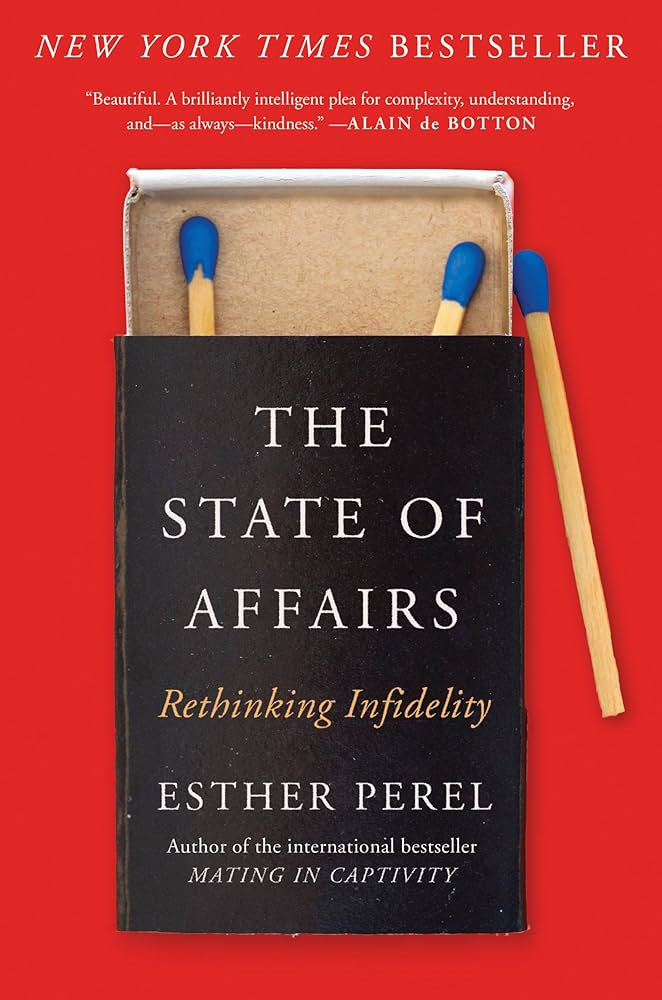
Most Surprising Book: The State of Affairs by Esther Perel
This book deals with the taboo topic of infidelity and affairs. I was surprised by how well Perel humanizes and presents all dimensions of affairs. She offers a much more nuanced version of the transgressor and the victim, and shows how affairs, while not a desired milestone in any relationship, don’t have to be a death penalty to a relationship. Instead, they can be the death of the first relationship and the beginning of the second one (if both parties want to). It challenged a lot of my notions about infidelity and brought voices to all parties involved.
I was also surprised by Esther Perel’s lively, biting, and compassionate writing. She delivers wit and insight with a lot of warmth and grace.
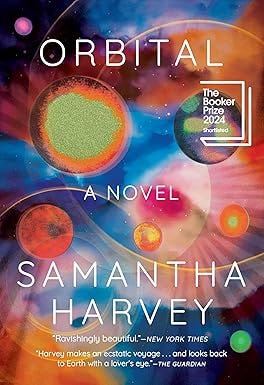
Most Frustrating Book: Orbital by Samantha Harvey
I had high expectations for this novel since it won the 2024 Booker Prize. If you like novels with no plot, then this book is for you. Now, why would anyone read a novel with no plot is a question I want to ask Harvey.
What’s the book about? It is a day-in-the-life account of astronauts in a space station above Earth with plenty of musings about their life in space, and life on Earth. That’s pretty much it.
The most frustrating part of this book is that it has some of the most beautifully written passages/descriptions I’ve ever read. There are pages within this book that are deeply intimidating for me to read as a writer. Yet, for all the beautiful prose, there weren’t really any stakes or tension. So if you want to read this book, approach it as a collection of semi-fictional essays about space and Earth and you might actually enjoy this book.
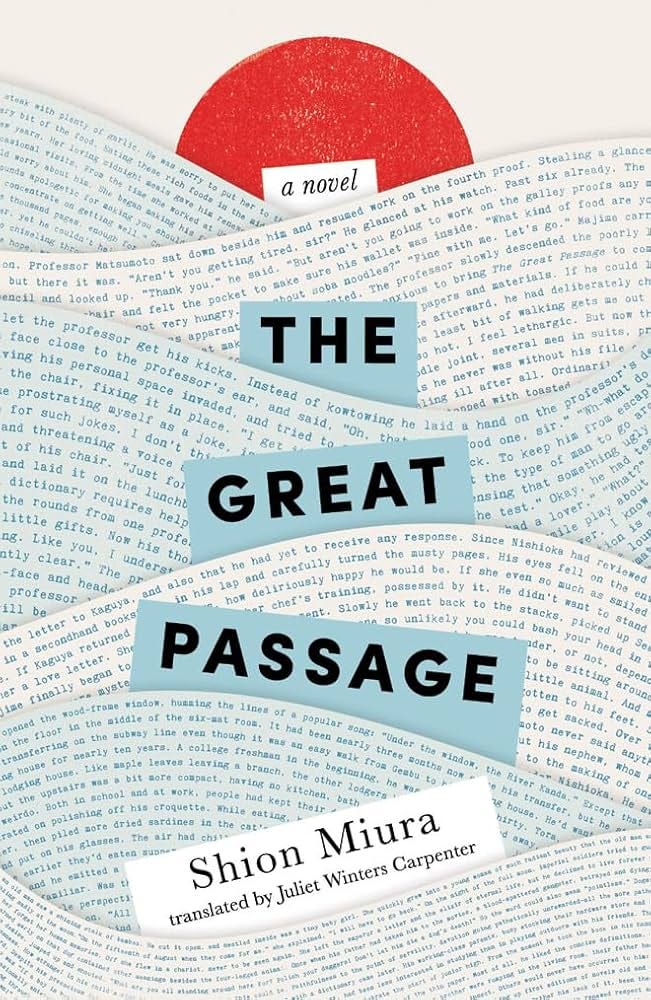
Most Delightful Book: The Great Passage by Shion Miura
I think I have a thing for Japanese novels. They are whimsical, endear me to Japanese culture further, and are often written like parables more than twisting thrillers or multigenerational epics. What I loved about this novel was its celebration of words and their meaning, the virtue of doing a thankless task you love for decades, and what love can be when the meaning of the word is studied more broadly.
I also read The Emissary by Yoko Tawaka (kinda weird), The Lucky Ride by Yasushi Kitagawa (a bit too simple, but great message), and Klara and The Sun by Kazuo Ishiguro (beautiful! probably runner up for favorite fiction book this year).
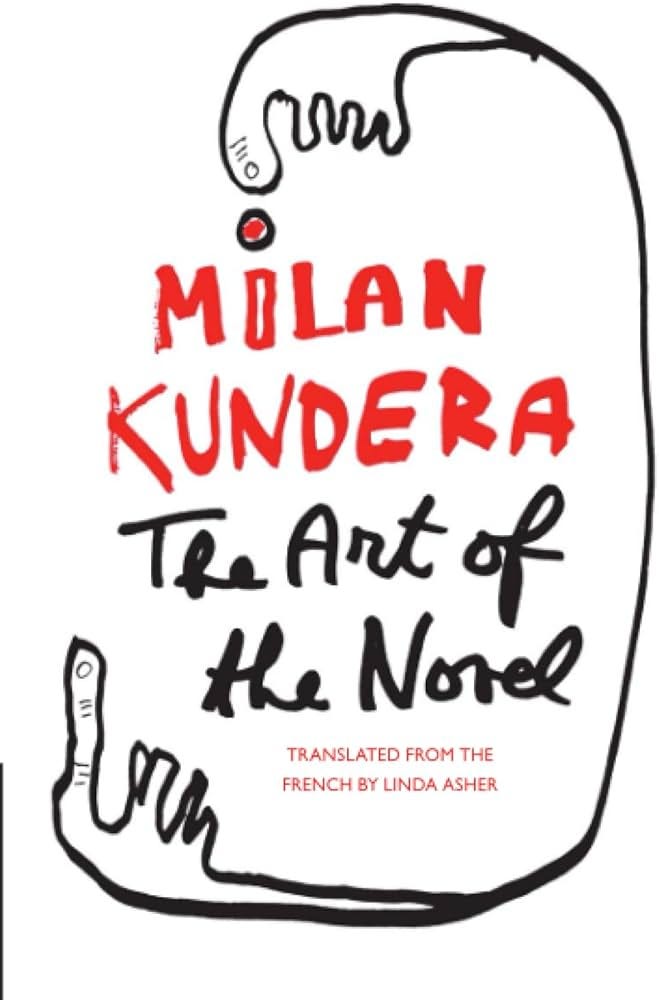
Most Insightful Book: The Art of the Novel by Milan Kundera
I’ve read multiple Kundera books this year, and if you want to understand his writing, I think this is the book you start with. I loved Kundera’s definition of the novel…the novel is meant to explore what only the novel is meant to explore. The definition is circular, but what I love is that he defines the novel as a vehicle for exploration, not just merely telling a story. And I think I’m attracted to writing that explores ethics, dilemmas, nuance, and conflicts that are impossible to resolve, etc. Kundera has also shaped a lot of my thinking over the past year (and some of the writing I’m working on dives deeper into a couple of his key ideas).
You know a book impacts you by how much you’ve annotated it—I couldn’t help myself but to put a sticky note next to nearly every page.
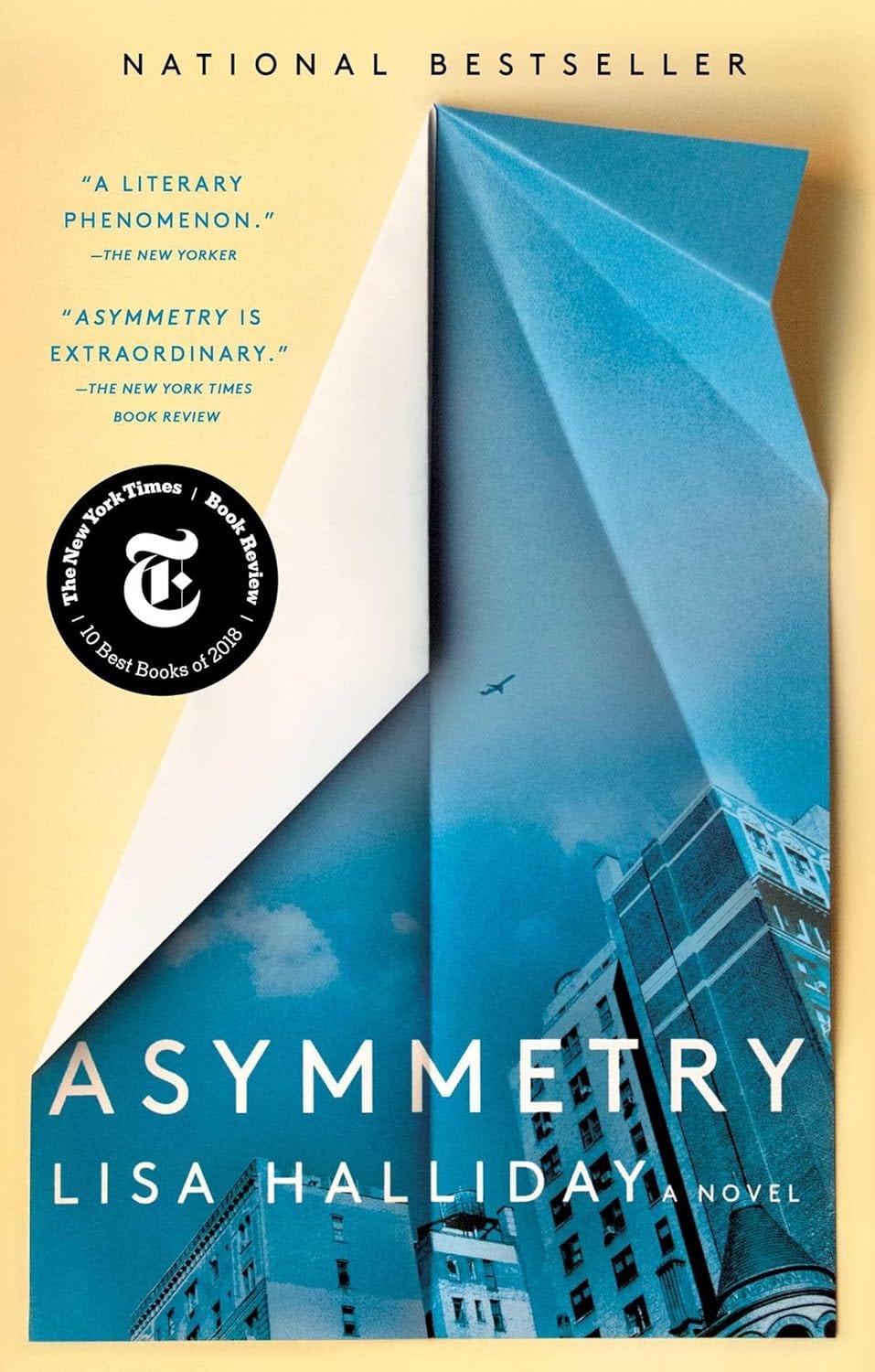
Favorite Fiction Book: Asymmetry2 by Lisa Halliday
I stumbled upon this book via a recommendation from a Bumble match that never materialized (thank you random nurse that was moving to Seattle!). This novel was excellent. It’s told in three acts, all with different narrators. It felt like two books in one, but they are all oriented towards the theme of exploring asymmetries in love and power. I have a feeling Halliday was inspired by Kundera’s writing, and hopefully one day I’ll get to ask her.
What took the book over the top was just the quality of its prose. It felt both easy to follow, but had depth. Also, for some reason I couldn’t help but to picture one of the main characters, Alice, as Dakota Johnson. In any case, once I was done reading it, my other main thought was “I want to write something this good.”
Here is one of my favorite passages from it:
So: two passports, two nationalities, no native soil. I once heard that, perhaps as compensation for their rootlessness, babies born on planes are granted free flights on the parturitive airline for life. And it’s a winsome idea: the stork that delivers you remains yours to ride here and there and everywhere, until it’s time for you to return to the great salt marsh in the sky. But, as far as I know, I was never offered such a bonus. Not that it would have done me much good. Initially, we did all our sneaking back on the ground, via Amman. Then Iraq invaded Kuwait and all American passport holders were grounded from riding Iraqi storks for what would amount to thirteen years.
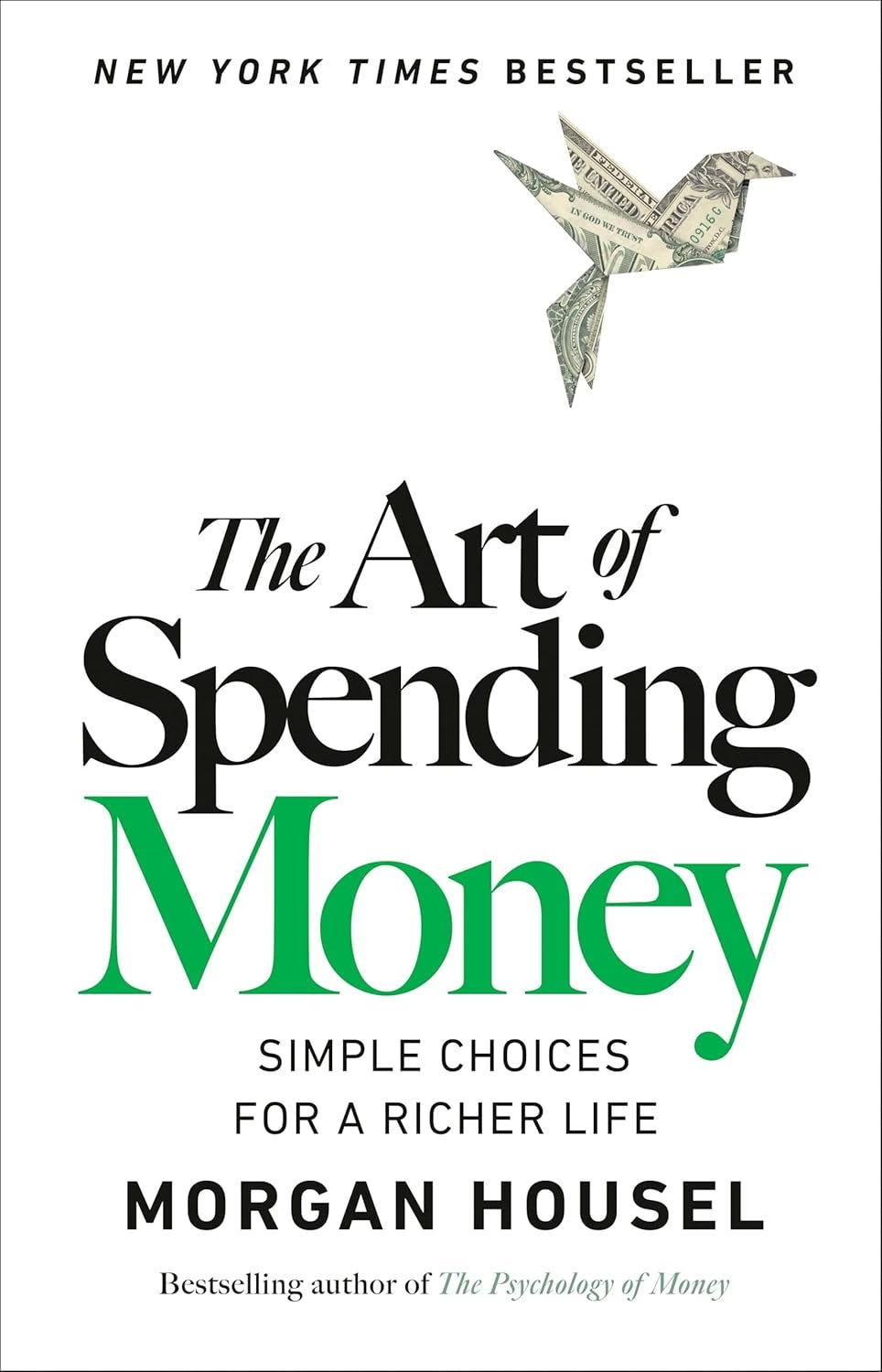
Favorite Non-Fiction Book: The Art of Spending Money by Morgan Housel
I think there are different kinds of writers:3 There are explorers, those who sound crazy because they are going way out there to explore the limits of language and understanding; there are storytellers who are masterful at keeping your nose glued on the page; there are synthesizers who are just damn good at taking complex ideas and simplifying them. Morgan is one of the best, if not the best “synthesizer” writer of his generation. The book has many great ideas that I love, but here are three that are worth sharing.
1) Nice life = independence + purpose. And independence/freedom is the true measure of wealth (not your bank account).
2) What brings happiness is the contrast between what you have now and whatever you were just expecting (he also advocates keeping your expectations low, which I generally agree with).
3) In his words: “People become so nervous about what other people think of their lifestyle and investing decisions that they end up doing two things: performing for others, and copying a strategy that might work for someone else, but isn’t right for them.” Yep. That’s been me!
Honorable mention: Honorable mention to the honorable Ursula K. Le Guin. She was the author I read the most from/about this year. She’s just awesome. I’ll probably write more about her in the future (because she’s a masterful thinker and writer), but if you haven’t picked up any of her writing, I recommend you do so. Start with the The Lathe of Heaven.
Outro: Why do we read?
I’ll trade the royal “we” for the certainty of the “I.” I read to learn, to escape, to converse. Books are a conversation and whenever I visit a bookstore, I’m in tremendous awe of the thousands of individuals who spent hundreds or thousands of hours putting something out into the world that they are hoping a few people will choose to converse with. I read because I want to converse with these authors, to see what their ideas spark in me, and because a well-written phrase, passage, is one of the most consistent levers of joy that I’ve found in my life.
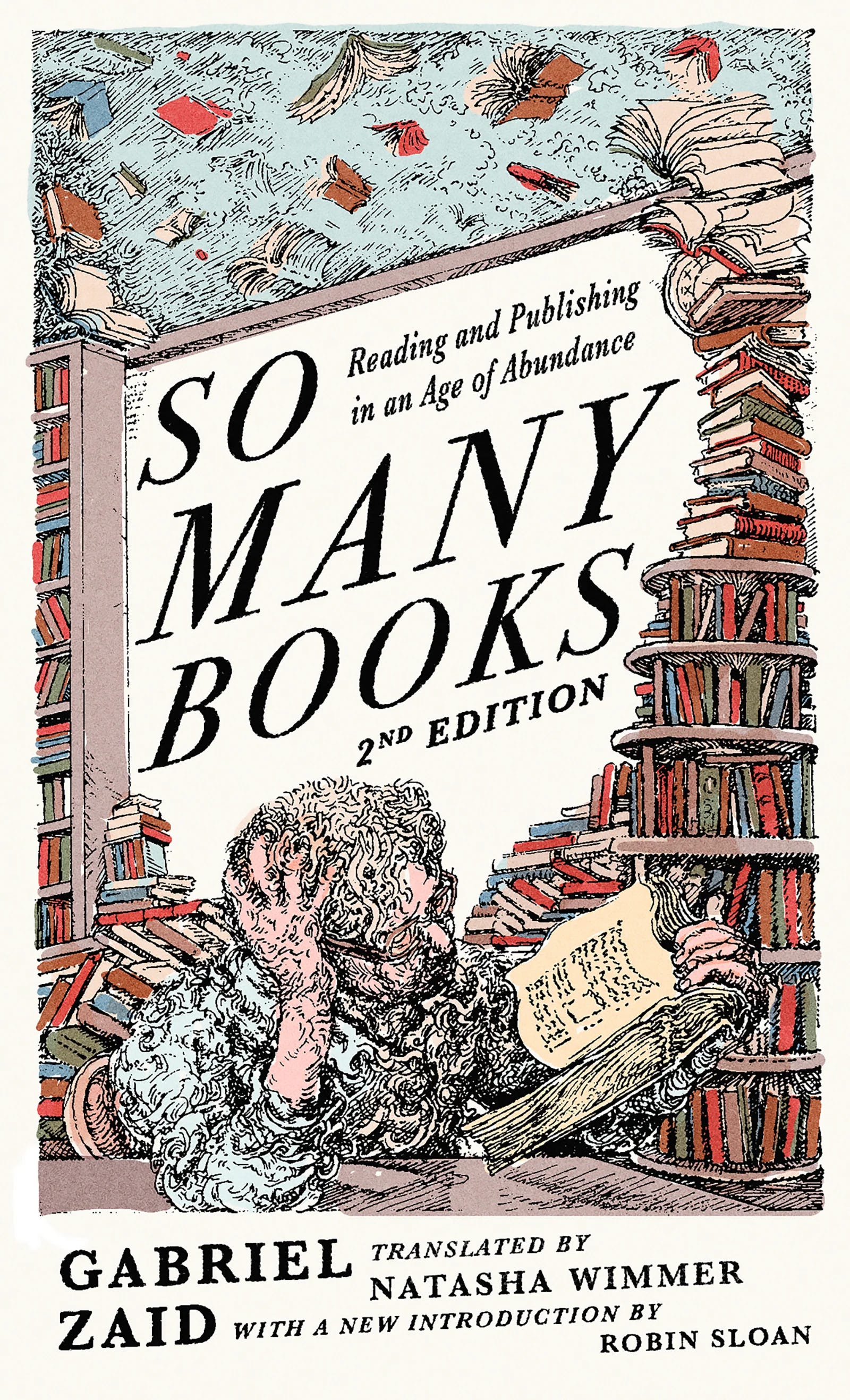
Ultimately, I read because of the effect of having conversed with the pages. In the words of Mexican writer Gabriel Zaid from So Many Books: Reading and Publishing in an Age of Abundance:
“What matters is how we feel, how we see, what we do after reading; whether the street and the clouds and the existence of others mean anything to us; whether reading makes us, physically, more alive.”
A Japanese term that loosely means the art of buying books and leaving them unread. Tsundoku was explored beautifully in this essay by my friend Alex Michael.
Incidentally, “asymmetry” has become one of my favorite words. And the fact that there an asymmetry in how the word is formed makes it even more delightful.
This is a theory in progress, so please indulge me.
Such a great list, I’ll need to try and incorporate some for this year. I also cannot handle a book with no plot or tension. I already loved Esther Perell but I was lucky enough to see her speak a couple years ago and I just loved her even more for the reasons you highlighted. She has a lovely sense of humor and is so magnetic.
"1) Nice life = independence + purpose. And independence/freedom is the true measure of wealth (not your bank account)."
Feeling that this snippet came at a very good moment as I believe this 95% of the time, but everyone once in a while need a booster shot to restore my immunity to hustle culture.